
Pathogen Reduced Plasma, Cryoprecipitate Reduced
produced from the INTERCEPT® Blood System for Cryoprecipitation
Advancing Blood Safety and Innovation
Pathogen Reduced Plasma, Cryoprecipitate Reduced (PRPCR) is a pathogen reduced blood component for transfusion or therapeutic plasma exchange (TPE) in patients with thrombotic thrombocytopenic purpura (TTP).* Manufactured using plasma produced from the INTERCEPT Blood System for Plasma, PRPCR serves as a source of plasma proteins with reduced levels of fibrinogen, factor XIII, vWF, and factor VIII compared to unfractionated fresh frozen plasma (FFP), with a 5-day post-thaw shelf life.
Comprehensive Pathogen Reduction and Blood Safety
PRPCR is produced from pathogen reduced plasma treated with the INTERCEPT Blood System. As a result, PRPCR provides robust, broad spectrum transfusion-transmitted infection (TTI) risk reduction† by inactivating bacteria, viruses, parasites, and leukocytes.1,2
The INTERCEPT Blood System for Plasma uses amotosalen, a photoactive compound that targets nucleic acids. Upon exposure to UVA illumination, amotosalen forms irreversible cross-links between the nucleic acid strands, effectively preventing replication and rendering a broad spectrum of pathogens inactive.
This proactive approach to blood safety reduces infection risk to enhance clinical outcomes.
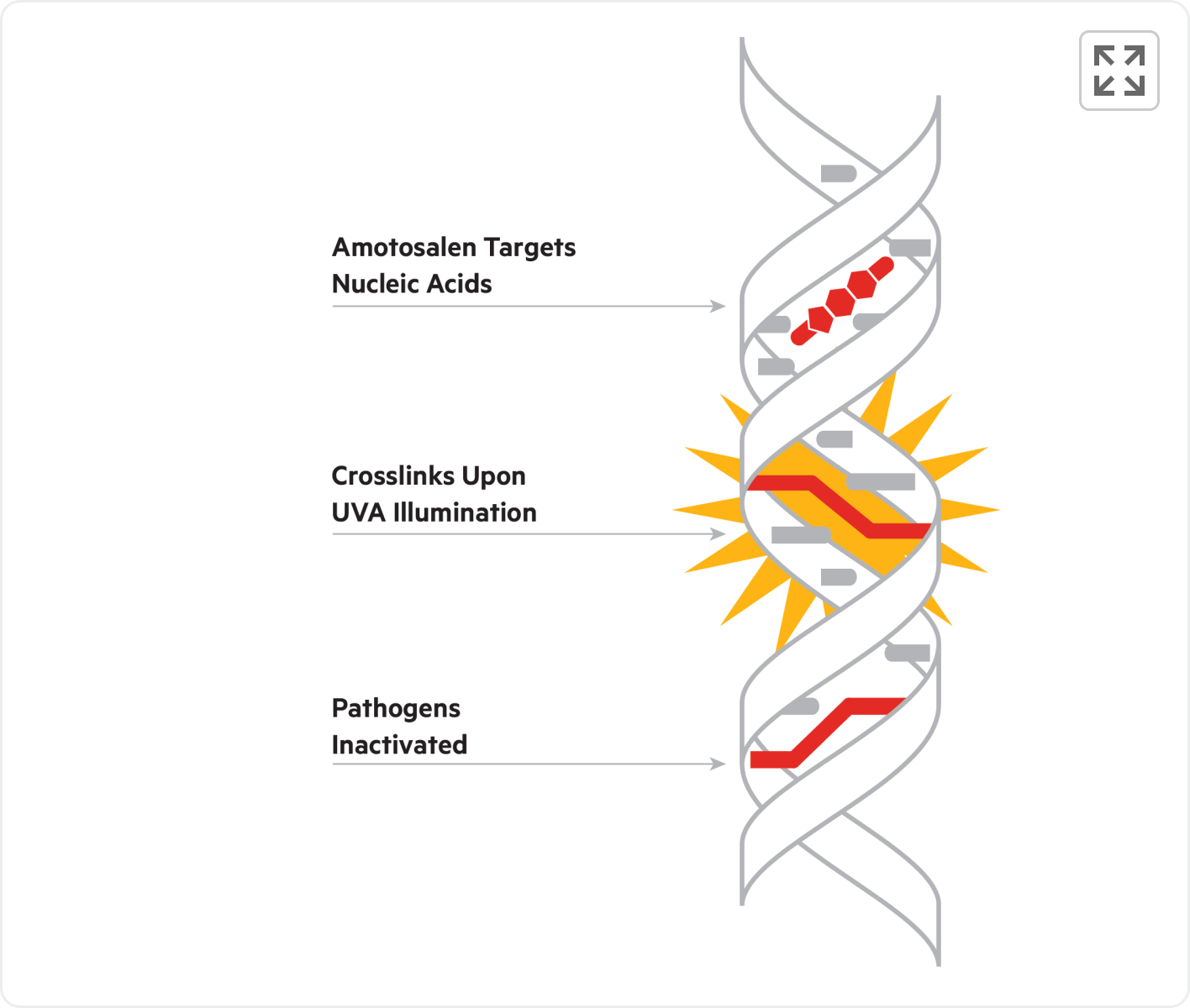
INTERCEPT Blood System Mechanism of Action
Availability and Operational Efficiency
PRPCR provides efficiency with its streamlined inventory and 5-day post-thaw room temperature shelf life.

Streamlined Inventory
Standardized single-use containers, provided as 240-295 mL units, simplify inventory management and east of use.

5-Day Post-Thaw Shelf Life
Store thawed product for up to five days at 1 to 6°C, with unused units easily returned to inventory and reallocated, minimizing waste.

12-Month Frozen Shelf Life
PRPCR arrives frozen with up to 12 months frozen shelf life.

5-Day Post-Thaw Shelf Life
You may also be interested in

INTERCEPT Fibrinogen Complex (IFC) Homepage
PRPCR Brochure

Resources
*INTERCEPT Pathogen Reduced Plasma, Cryoprecipitate Reduced has not been evaluated in a clinical setting.
†There is no pathogen inactivation process that has been shown to eliminate all pathogens. Certain non-enveloped viruses (e.g., HAV, HEV, B19, and poliovirus) and Bacillus cereus spores have demonstrated resistance to the INTERCEPT process. For a full list of pathogens, please refer to Package Insert.
References: